
















![[25 Years of Silco] It All Started With an Idea](/Data/File/@W400/blog-2024-12-barvanje-pozimi.png "[25 Years of Silco] It All Started With an Idea")
































- Necessary
- Analytics
- Targeting
Show details
When temperatures drop, choosing the right hardener becomes just as important as selecting the right paint.
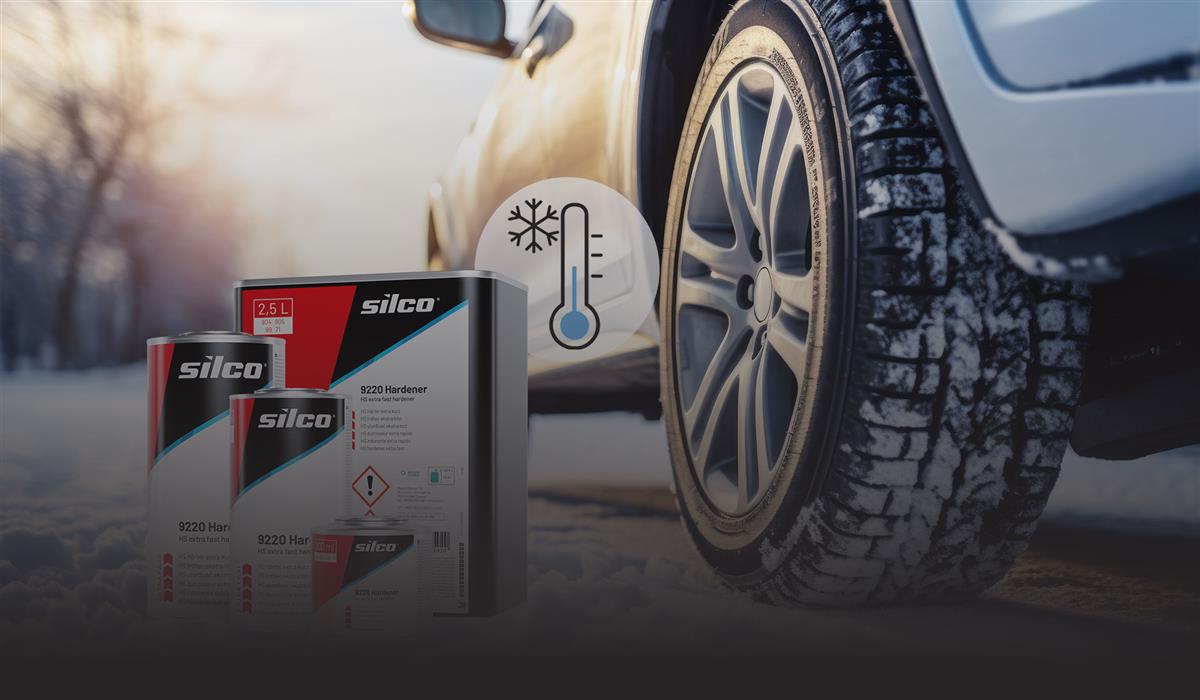
By combining the appropriate hardener speed, proper preparation, and, if necessary, the use of Silco 3130 Accelerator (1–3 %), you can achieve fast and reliable curing as well as a durable high-quality finish even in winter conditions.
Why Hardener Speed Matters More in Winter
Modern two-component (2K) car refinishing systems (primers and clearcoats) rely on a chemical reaction between the paint and the hardener. Temperature and humidity strongly influence the speed and completeness of this reaction. At low temperatures, standard or slow hardeners react more slowly, so:
For this reason, many car refinishing systems recommend using fast hardeners and thinners at lower temperatures (approximately 5–18 °C) to maintain reasonable drying times and productivity.
Basic Winter Rules Still Apply
Before focusing specifically on hardeners, all basic winter precautions should be observed:
Store Materials Warm
Keep paints, hardeners, and additives in a heated space, ideally at 15–25 °C. Cold materials become more viscous and harder to spray, and water-based products can even be damaged at low temperatures.
Warm Up the Vehicle
A cold car body slows curing even in a warm booth. Let the vehicle sit in the booth for at least 30 minutes so that the surface temperature rises and moisture evaporates.
Avoid Condensation and “Thermal Shock”
Painting a cold surface in a warm, humid booth can cause condensation on the panel, leading to poor adhesion and various coating defects. Maintain painting conditions at least about 3 °C above the dew point and ensure stable temperature and humidity.
Thoroughly Clean Winter Contamination
During winter, salt, road film, grease, and oils are common. Wash the parts to be painted with a suitable cleaner, then degrease with an anti-silicone cleaner before sanding and painting to ensure good adhesion and long-term durability.
These steps create the proper foundation for the hardener to work as intended.
Choosing the Right Silco Hardener Speed in Cold Conditions
Silco offers different hardener speeds for 2K polyurethane and acrylic systems (extra fast, fast, standard, slow). Choosing the right hardener is especially beneficial in winter.
In winter conditions, fast and extra-fast hardeners are usually the first choice, as they compensate for the temperature-related slowdown of the curing reaction. Many independent refinishing guides explicitly recommend using fast hardeners when spraying in cold conditions to keep drying times under control.
Tip: Do not try to “fix” cold, thick paint by adding more thinner. While this may improve sprayability, it reduces film build, can weaken adhesion, and alter the color. Instead, warm the materials and choose a faster hardener.
How and When to Use Silco 3130 Accelerator
In addition to different hardener speeds, Silco also offers Silco 3130 Accelerator – a universal accelerator for 2K polyurethane and acrylic car refinishing materials.
In winter, 3130 is useful for fine-tuning when:
Recommended Addition:
What 3130 Helps With in Winter:
Conclusion
Winter does not necessarily mean compromising on quality or long waiting times. By storing and preparing materials correctly, warming the vehicle, controlling humidity, and selecting the appropriate Silco hardener speed for the actual temperature, you can maintain curing times under control, ensure high-quality finishes, and deliver durable repairs throughout the season.
Finally, using a faster hardener is not the only factor to consider during cold winter months. Careful consideration of using a faster Component A (clearcoat or paint) is also key to achieving the best possible combination and optimal results.